Giacomo Brunelli Eyes Animals
Giacomo Brunelli is a great photographer and he set out to capture the spirit and essence of everyday animals in a new book.

Giacomo Brunelli is a great photographer and he set out to capture the spirit and essence of everyday animals in a new book.
Are we in danger of losing our digital memories?
Too many of us suffer from a condition that is going to leave our grandchildren bereft. I call it personal digital disorder. Think of those thousands of digital photographs that lie hidden on our computers. Few store them, so those who come after us will not be able to look at them. It’s tragic.
As chief executive of the British Library, it’s my job to ensure that this does not extend to our national memory. At the exact moment Barack Obama was inaugurated, all traces of President Bush vanished from the White House website, replaced by images of and speeches by his successor. Attached to the website had been a booklet entitled 100 Things Americans May Not Know About the Bush Administration – they may never know them now. When the website changed, the link was broken and the booklet became unavailable.
The 2000 Sydney Olympics was the first truly online games with more 150 websites, but these sites disappeared overnight at the end of the games and the only record is held by the National Library of Australia.
Eat a Big Mac. Lose your mind. Is there a link between eating fast food and Alzheimer’s? Susanne Akterin, a researcher at the Karolinska Institutet’s Alzheimer’s Disease Research Center, believes she has found the cause-and-effect for that behavioral disease.

Continue reading → Fast Food Forgetfulness and the Poverty of Memory Loss
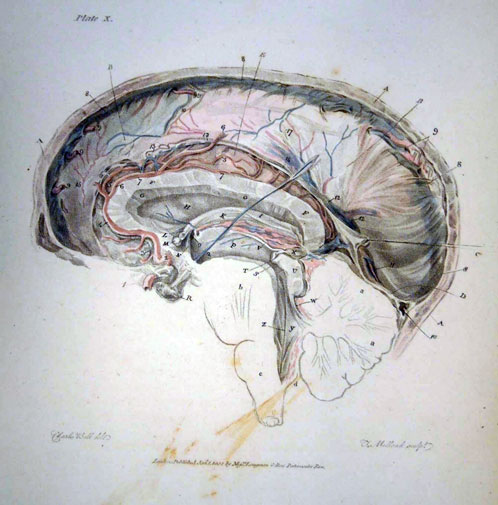
How do we remember? Is there an inherent danger is misremembering? If we learn by thinking, is the preserved result of that process our saved memories?
Why are we obsessed with playing with our brains? Is it because we understand the least about our thought processes and that unknown threatens us? Does God live in the mind? If we puncture the blood-brain barrier, have we finally captured the magic behind the red velvet rope line?

Continue reading → A Semiotic History of Playing with Brains
We know a promise only lives as long as the one making the promise, and today we must confess that no idea is forever.

Do we create our thoughts? If we create them, do we own them? The United States Army is working on new “thought helmets” where “thought synthesis” between soldiers will be immediate an unspoken.
Continue reading → Panopticonic Thought and Military Thinking
You must be logged in to post a comment.