Speeding Up to Slow Down

Sometime in the early 1980s, while researching a play, I spent an afternoon talking with a Nebraska State Trooper about the border between local law enforcement and the state patrol. We covered jurisdiction, drugs, homicide, and how causes of death get decided in a county with more cattle than people. By then he had worked those highways for twenty years. He was a careful man with a careful voice, and when the talk turned to death on the road, he lowered it. When you read about a one-car crash that kills the driver on a Nebraska highway in the middle of the night, he said, you are usually reading about a suicide. The car alone, the road empty, the bridge or the embankment at full cruise.

Continue reading → Speeding Up to Slow Down

Population One, All in Favor

The election notice goes up on the tavern wall. That is how the mayoral race begins in Monowi, Nebraska, the only incorporated village in America with a population of one. Elsie Eiler tapes the announcement up inside the Monowi Tavern, the bar she and her husband bought in 1971, and then, as the BBC’s filmmakers recorded, she votes for herself. She wins unanimously. She has won every year since the count fell to one, because she is the entire electorate and the entire government: mayor, clerk, treasurer, librarian, and bartender of Monowi, population one.

Continue reading → Population One, All in Favor

Rudy’s Library Is Open

The key to the public library in Monowi, Nebraska hangs on the wall of the town’s only tavern, within reach of the bartender. Ask and she hands it over. Then the shed a few steps from the bar is yours for the afternoon: five thousand books and magazines, floor-to-ceiling shelves, and a sign painted by grandchildren on the side of an old refrigerator that reads Rudy’s Library. There are no library cards and no overdue fines, and there is no librarian at a desk, because the librarian is the woman who just handed you the key. She is also the mayor. You borrow on honor and you return when you can. That is the whole system, and it has held for twenty-two years.

Continue reading → Rudy’s Library Is Open

The Neighbor the Census Invented

The 2020 census counted two people in Monowi, Nebraska. The arithmetic surprised the only one of them. Elsie Eiler has lived alone in the village since her husband Rudy died in 2004. She is the mayor, the clerk, the treasurer, the librarian, and the keeper of the Monowi Tavern, the last business open in a town of 0.21 square miles on the far northern edge of the state. When the new census figures came out in August 2021 and showed Monowi’s population doubled, she gave the Lincoln Journal Star the only answer a competent count of one allows. “Well, then someone’s been hiding from me, and there’s nowhere to live but my house. But if you find out who he is, let me know?”

Continue reading → The Neighbor the Census Invented

The Silo Remembers the Harvest

From Nebraska to New York, the silos are hollow until hallowed. The elevator starts before the sun does. On a November morning in 2019, I stood by a rail siding in a county-seat town in Nebraska and watched a truck empty itself into the pit while the leg lifted the corn a hundred feet into the headhouse, kernel by kernel, out of sight. What stays with you is the sound. A grain elevator at work has a voice like weather, a steady granular rain inside a concrete throat, and the dust it exhales catches the first light and holds it for a moment above the tracks. The building does one thing a child could explain: it keeps the harvest, standing at the edge of town, taller than the church, the courthouse, and the water tower, doing that one thing for a hundred years. Yet the same word that names this building now names the most despised structure in American institutional life. Say “silo” in a boardroom or a hearing room and the response arrives on reflex: break them down. Somewhere between the rail siding and the hearing room, the container became the crime.

Continue reading → The Silo Remembers the Harvest

Getting the Flock Out of Ord, Nebraska

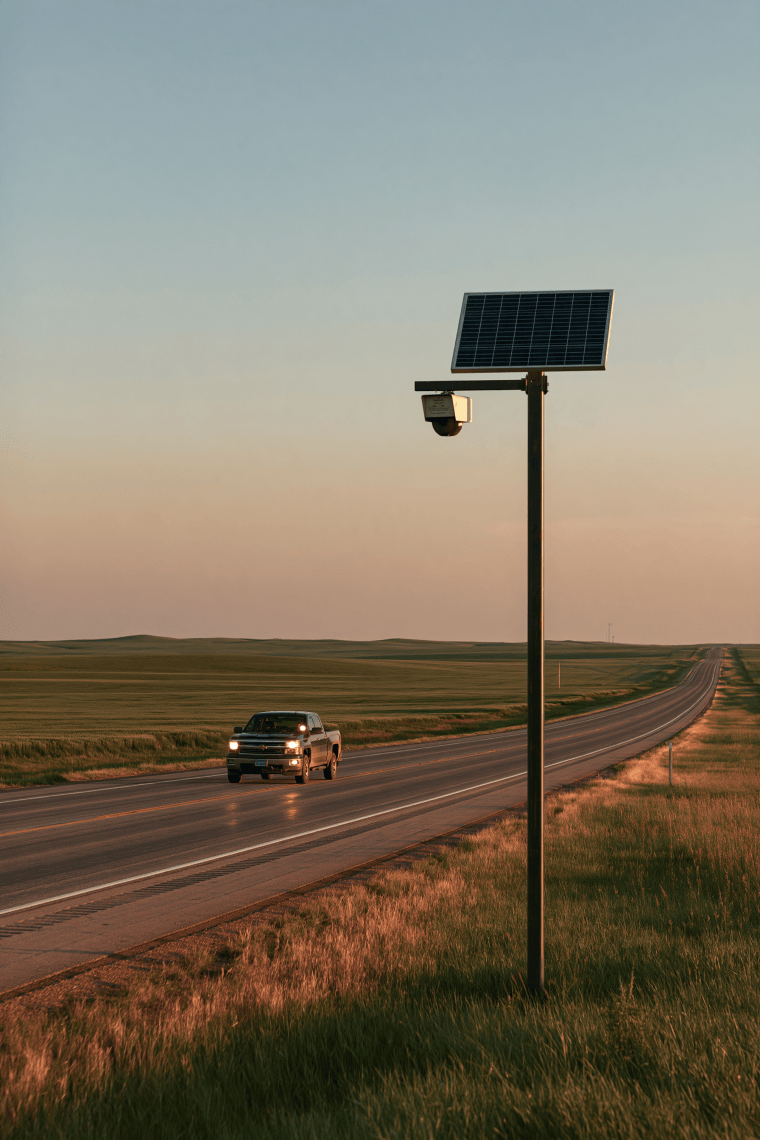
The county seat of my boyhood summers just voted, five to nothing, to pull its surveillance cameras off the poles, the first town in Nebraska to do it. The reasons cut deeper than the invoice. Ord, Nebraska sits eleven miles up the North Loup River valley from the village of North Loup, where I spent the summers of my boyhood on my grandfather’s place, and in the mental geography of a ten-year-old those eleven miles separated the known world from its capital. North Loup had a few hundred souls, a grain elevator, and Popcorn Days. Ord had the Valley County courthouse with a square built around it, implement lots, storefront commerce enough to dazzle a village kid, and a radio station whose call letters spell the valley itself: K-N-L-V, North Loup Valley, on the air at 1060 since 1965 with farm markets in the morning and high school ball at night. When my grandfather’s rooftop antenna strained for television it caught one signal, 10/11 out of Lincoln, and that was the extent of the visible world. Ord was “town.” You washed up a little before going.

Continue reading → Getting the Flock Out of Ord, Nebraska

The Post Office as the Last Great American Place

I am confounded by the hatred of the Post Office by Republicans.  There is nothing more American than the United States Postal Service.  I don’t understand why the GOP are so willing to kill a necessary, national, institution.  I love getting mail.  Yes, I pay my bills electronically, but I still send and receive lots of paper letters and cards. The latest game of the 2006 GOP is being played out in August of 2013 — and the horrible result is forcing the Post Office to cease Saturday mail delivery.  Email didn’t kill the mail — the fax machine didn’t kill the mail — the Republicans killed the mail.

Continue reading → The Post Office as the Last Great American Place