Page 6 of 11

The Provenance of the Provincetown Playhouse as a Failed NYU Revival

The Provincetown Playhouse holds an important niche in early American Theater History as the staging point cradle of the great Playwright Eugene O’Neill’s earliest, and most challenging, plays and the theatre was the hearthstone for premier plays written by Edna St. Vincent Millay, Edward Albee, John Guare, Sam Shepherd, Charles Busch, and David Mamet.

Continue reading → The Provenance of the Provincetown Playhouse as a Failed NYU Revival
The Collective Nothing: Postmodernism in the Modern Era

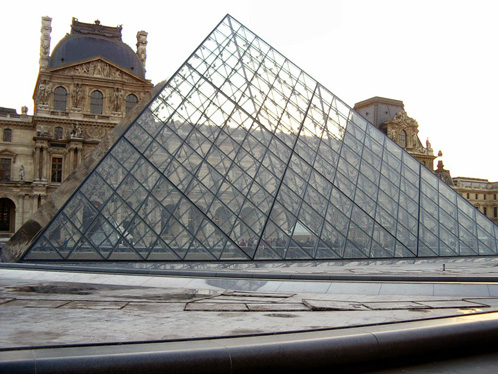
The Postmodernist Art movement honors the — Collective Nothing — because the genre doesn’t want to be tied to anything specific, verifiable, or humanly truthful.  The most famous Postmodernist art example in our lifetime is the disgusting “glass pyramid” addition to the Louvre Museum in Paris.

Continue reading → The Collective Nothing: Postmodernism in the Modern Era

Why You Button a Scene

There’s an old theatre chestnut — that is basically misunderstood — that goes a little something like this:  “Every scene needs to end on a button.”  Sometimes you’ll even see a director pacing at the back of the theatre asking out loud, “How do I button this scene?”

Continue reading → Why You Button a Scene

Amplification Made the Live Theatre the Radio

There was a time in the live theatre when actors did not wear microphones.  Actors were required to develop a strong ability to project their voice in song and dialogue.  It was magnificent to hear a live voice singing with a live orchestra.  Today, the actors wear microphones and, for many Broadway shows, the entire orchestra is artificially amplified because the stringed instruments are playing live from a different floor in the theatre and they watch the conductor via closed-circuit television.

Continue reading → Amplification Made the Live Theatre the Radio

U.S. Steel and The Theatre Guild

There was a Golden Decade in American television between the years 1952-1963 when live theatre performances were aired live on the young ABC Television network.  The show was called — ”The United States Steel Hour” — and it was produced by The Theatre Guild, and we’ve never had such a perfect blending of live performance for a national audience.

Continue reading → U.S. Steel and The Theatre Guild

How One Act Plays Killed the Theatre

I am not a fan of the One Act Play — even though I’ve written many of them — because I now realize just how ubiquitously they have killed the modern theatre by shaving expectation, shortening audience attention spans and by setting a low-budget watermark for producers and a little-to-none time commitment for directors and actors.  One Act Plays are a cheat against the human spirit, as the convenience of mindless television plotting replaces the tension of the live stage performance.

Continue reading → How One Act Plays Killed the Theatre

Thinking About Eric Bentley

In thinking about Eric Bentley as he stretches beyond his 93rd birthday, we are torn between the genius of his writing and his coldness as a man.  Will the writing endure?  Or will the chilly memory frost the evergreen talent?

Continue reading → Thinking About Eric Bentley