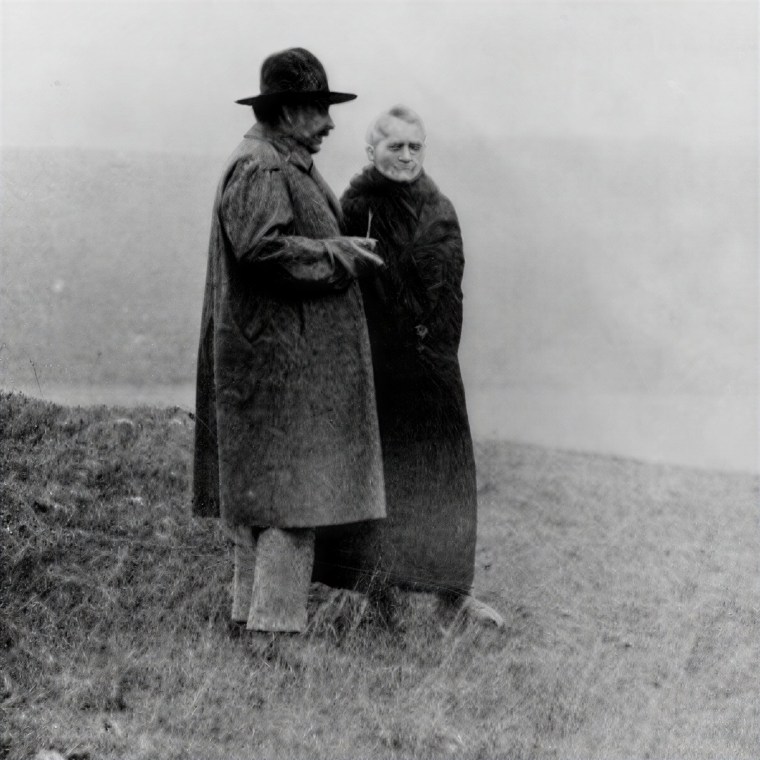
The Conceit of the Clock: Aristotle, Time, and the Hunger That Devours Us

Aristotle opens his investigation of time in Book IV of the Physics with a question so destabilizing it threatens to collapse the inquiry before it begins: does time even exist? His reasoning is not coy. The past has ceased to be. The future has not yet arrived. The present, the “now,” is not a duration but a limit, a dimensionless boundary between what was and what will be. If the parts of time do not exist, and the one element that does exist is not itself a part of time, then time appears to be nothing at all. This is not a classroom riddle. It is a genuine ontological crisis, and Aristotle treats it as one.

Continue reading → The Conceit of the Clock: Aristotle, Time, and the Hunger That Devours Us

The Curated Self as the New Delusion

There is a specific, modern anxiety that is difficult to name. It is not the dread of a specific event, but a low-grade, constant hum of disconnection. It’s the feeling of living in a world that is eerily frictionless, a world that reflects your own thoughts back at you with placid, unwavering agreement. It is the anxiety of a consensus of one; the quiet, digital loneliness of being the only person in your own universe.

Continue reading → The Curated Self as the New Delusion

The Application of Imagination: Where Thought Becomes Matter

Imagination without application remains a private theater, brilliant perhaps, but ultimately sterile. The history of human achievement suggests that genius resides not in the capacity to imagine alone, but in the peculiar ability to transform mental constructs into material reality. This transformation requires something more demanding than pure creativity: it requires the discipline to translate vision into form, the patience to iterate through failure, and the courage to impose one’s internal architecture onto an indifferent world.

Continue reading → The Application of Imagination: Where Thought Becomes Matter

How AI Art Extends Our Originality of Imagination

In the world of AI (Artificial Intelligence) Art, and NFT Art, there are some who believe that sort of machine-made Art is fakery, and it, therefore, does not quantify as an aesthetic effort, while others, like me, see the rise of AI in Art, and Writing, and Science, as only a good thing — at least for now, before AI inevitably becomes our Overlord — as our ability as a Human Race continues to find new ways extend our originality of imagination. Take, for example, the following set of images where I asked the Midjourney Bot V4, to create a “treehouse neighborhood in a big city.”

Continue reading → How AI Art Extends Our Originality of Imagination

The Imaginary Integer

One vote. One nation. One dream. One spirit. One soul. Except — when, as a person, you’re only worth three-fifths. Who chooses the fraction? Who creates the integral definition of one human life over another based on decimals, point schemes, and not on whole numbers? We like to believe the world is as fair, and as ordered, as our parents promised us it would be. Two arrives after one. The opposite of amber is divinity. The soul of humankind is undisturbed, except by the precepts of intentional evil clinging to the moon to cleave the star. We live in a numeric world, where measurements are predictable, dreams are quantified, and dissolved in commandments, and end games are more than simple crucifixions.

Continue reading → The Imaginary Integer