One Thirty Over Eighty: How America Lowered the Hypertension Line While Europe Held Steady

A single edit to a single table turned tens of millions of healthy Americans into patients overnight. The question is whether the line was drawn for them or for the people who bill them. In November of 2017, the American College of Cardiology and the American Heart Association released a clinical guideline that ran to roughly four hundred and eighty pages, and somewhere in the front matter they moved a single number. The threshold for diagnosing high blood pressure fell from 140/90 to 130/80. Nobody’s artery changed that day. No chest tightened, no vessel narrowed, no symptom appeared. And yet, by the arithmetic of that one revision, about thirty-one million Americans who had been healthy the previous evening were now classified as having a chronic cardiovascular disease. National prevalence of hypertension climbed from near thirty-two percent of adults to near forty-six percent between one edition of a document and the next, and among adults under forty-five the rate more than doubled. Nothing about the population’s arteries had changed; only the boundary of the word had moved.

Continue reading → One Thirty Over Eighty: How America Lowered the Hypertension Line While Europe Held Steady

Arm Angles in American Sign Language: The Textbook That Teaches What Other Textbooks Ignore

Watch any native signer and then watch an intermediate student. The difference is not in the handshapes. It is not in the facial expressions, though those matter. The difference lives in the arms. The native signer’s shoulders engage when emphasis requires it. The elbows extend and contract with meaning. The signing space expands for formal address and contracts for intimacy. The student, trained to focus on hands and face, moves through space as if the arms were merely transportation for the fingers. This is the gap that Arm Angles in American Sign Language addresses. It is the textbook we wished existed twenty years ago.

Arm Angles in American Sign Language by David Boles and Janna Sweenie

Continue reading → Arm Angles in American Sign Language: The Textbook That Teaches What Other Textbooks Ignore

Abortion in the Dental Chair

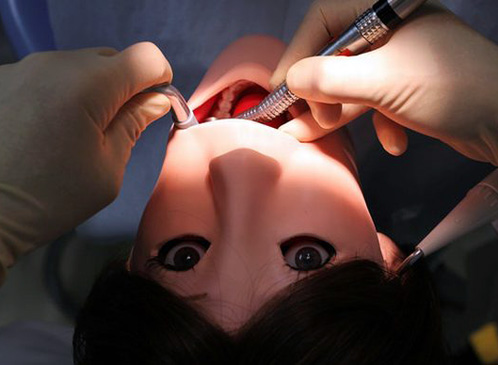
There’s only one thing worse than sitting in a dental chair — numbed with Novocaine — waiting for your third root canal in three weeks to be uprooted, and that is having to listen to an anonymous, blowhard, dentist in another room proselytize, at the top of his lungs, all the reasons why abortion is medically unnecessary.

Continue reading → Abortion in the Dental Chair

The Arts and Alzheimer's

Can The Arts help Alzheimer’s patients find the center of average living?  Is it possible that imagination and abstraction can actually provide form and coherence for the fading mind?

Continue reading → The Arts and Alzheimer's

ER is Over

After 15 years and 122 Emmy nominations — ER, the Michael Crichton-inspired television series — is over.

Continue reading → ER is Over

Amputation Via Texting

Could you do an amputation following instructions sent via text messaging?  Two surgeons did just that —  one was in the Congo — the other doctor was in London.

Continue reading → Amputation Via Texting

Soap Operas and Public Health

We can learn a lot from television.  Sometimes the best teaching comes when presented in a dramatic form.  Soap Operas have been a stable of American television for fifty years and their very structure brings form to understanding.

Continue reading → Soap Operas and Public Health