Figure Eights

The internet has decided that modern humans are developing zoochosis, the madness of caged animals. The claim is older than TikTok, and the truth underneath it is more uncomfortable than either the believers or the scoffers want it to be. For most of the 1990s, the most famous resident of the Central Park Zoo was a 700-pound polar bear named Gus who spent up to twelve hours a day swimming the same figure eight through the same small pool. Back and forth. The same loop, traced into the water until it wore a groove in the day. Reporters called him neurotic, depressed, flaky, and bipolar, and New Yorkers half-adopted him as a mascot for their own condition. In 1994 the zoo paid an animal behaviorist twenty-five thousand dollars to find out what was wrong, and the verdict passed into legend. Gus, the behaviorist said, was bored and mildly crazy in the way that a lot of people in New York are. The zoo redesigned his habitat, hid his food inside blocks of ice, gave him toys, and made him the first zoo animal in recorded history to be put on Prozac. The swimming eased. It never fully stopped. Until the day he died in 2013, there were afternoons when Gus would throw himself back into the water and trace the loop again, and again, and again.

Continue reading → Figure Eights

Arm in Arm with Chance

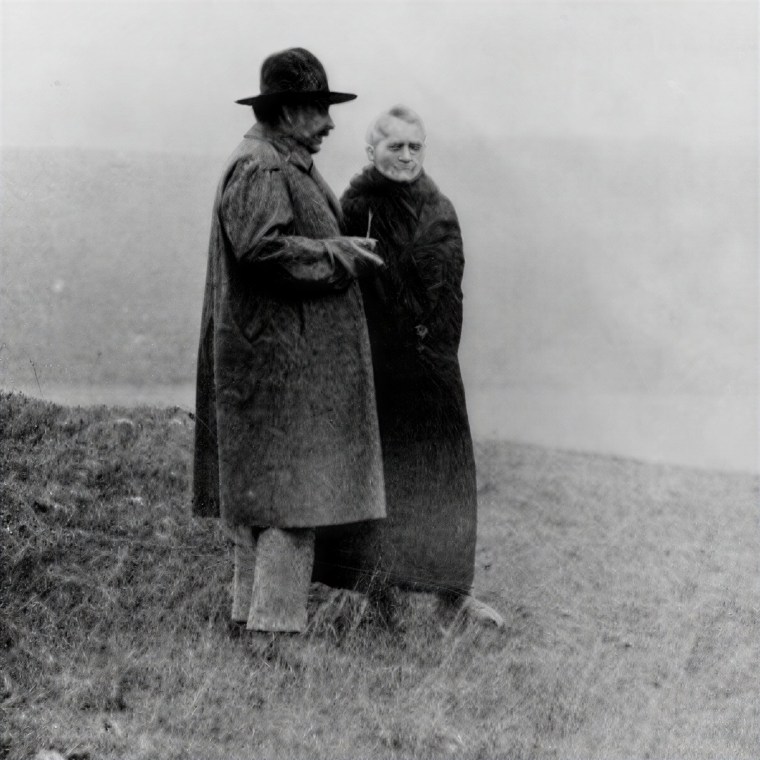
A misdated photograph, two of the largest minds of the last century, and the partnership physics never got. The photograph travels well. A man and a woman walk the edge of a lake, both buttoned into heavy coats against a cold the season should not have brought. He wears the famous hair, gray now at the temples, the drooping mustache, the look of someone who long ago stopped negotiating with his tailor. She is smaller and upright, her face composed into the expression of a person who has weighed sorrow by the gram. Their arms are linked. The internet, which prefers its history pre-chewed, captions the image with confident precision: Albert Einstein and Marie Curie, Saranac Lake, New York, 1929. Nearly every word of that caption is wrong.

Continue reading → Arm in Arm with Chance

The Vacuum Where the Evidence Should Be

Zach Bush, a physician in good standing, sits across from an interviewer and describes the soul, calm and fluent, generous with wonder. He says that every millionth of a second the atoms of your body dissolve and return, that a single fertilized cell organizes itself into a child by reading a map no biologist can locate, and that the map lives in the vacuum, in the electromagnetic field that fills the empty space inside every atom. He calls this the anatomy of the soul. In a 2021 essay on his own website he writes that the body projects itself as a hologram, and that its apparent solidity is an impression made by light. The performance is seductive because the vocabulary is real. Differentiation, migration, electromagnetic field, vacuum: each of those words has a home in a textbook. The trouble begins the moment you check whether they are being used the way the textbooks use them, or whether they have been borrowed to dress an idea that biology and physics both reject.

Continue reading → The Vacuum Where the Evidence Should Be

Long Live Your Bloodstream

Our blood knows our secrets and foretells our health.  Sometimes we’re told the now of the being of our bloodstream — high cholesterol, bad thyroid, liver complications — but what if our blood could tell us today, how we’ll end up in the future?  Would you want your blood to tell your longevity status?  Or would you prefer to live only in the now?

Continue reading → Long Live Your Bloodstream

Infant Criminals, Bad Seeds and Guilty Ovum

Are adult criminals bred of bad seed and guilty ovum? Are infants born guilty? Is there such a thing as a natural proclivity for the “Infant Criminal” born of color and of poverty that is set, from the day of first breath, to destroy society and its conceits as a rite of birth?

The Bad Seed!

Continue reading → Infant Criminals, Bad Seeds and Guilty Ovum