Page 2 of 10

The Confederate Question Never Closed

An old professor’s epigram, tested against the monuments, the forts, the flag, a Supreme Court ruling from this spring, and the counterfeit history of emancipation now spreading online. An old history professor of mine once offered a sentence that has outlasted most of what I learned in his classroom. The South lost the battle, he said, and won the war. He meant that the Confederacy was more alive in the present than it had been on the April morning when Lee surrendered to Grant at Appomattox. The claim sounded like provocation at the time. It reads now like a weather report. Army forts carry the names of men who took up arms against the United States. The Supreme Court has just rewritten the rules that protected Black voters in the states most determined to suppress them. A battle flag the rebel armies never managed to carry into Washington was paraded through the Capitol in 2021. My professor’s epigram deserves a hearing, and it deserves a harder examination than its admirers usually give it, because one half of it is true in a way that should alarm anyone who wants a working democracy, and the other half is false in a way that can disarm the people who would defend one.

Continue reading → The Confederate Question Never Closed

The Magnificent Loser: The Book I Wrote to Answer Two Words in Red Ink

Every writer carries a verdict he never agreed to. Mine was two words long, written in red marker across the title page of a play I cared about, by a historian whose judgment I had asked for and could not afford to ignore. BAD DRAMA. No note beneath it, no argument, no second page. I was in my twenties. I put the play in a drawer and told myself I had learned something useful about my own limits. It took me forty years to understand that I had learned the wrong lesson, and that the right one would take an entire book to say.

Continue reading → The Magnificent Loser: The Book I Wrote to Answer Two Words in Red Ink

One Eighth of an Inch: Julian Jaynes, the Bicameral Mind, and the Bandwidth of God

Start with a measurement, because the measurement is where the famous theory hides its best secret. In The Origin of Consciousness in the Breakdown of the Bicameral Mind, published in 1976, the Princeton psychologist Julian Jaynes had to explain how one half of the brain could hand a finished thought to the other half. He reached for anatomy and found a strip of nerve fiber connecting the two temporal lobes, the anterior commissure, which he measured at slightly more than one eighth of an inch in diameter. That tiny bridge, he proposed, carried the voices of the gods. The width of the channel is the whole argument, and almost everyone who summarizes Jaynes leaves it out.

Continue reading → One Eighth of an Inch: Julian Jaynes, the Bicameral Mind, and the Bandwidth of God

The Rented Crowd: Nero’s Five Thousand, the Paris Claque, and the Box That Laughed for America

For the better part of two decades, the laughter of the United States lived inside a padlocked box. Charles Rolland Douglass, a CBS sound engineer who had spent the war helping the Navy develop shipboard radar, built the device in the early 1950s and guarded it the way a sexton guards a reliquary. The laff box, as he called it, stood a little over two feet tall and worked like an organ: keys for titters, chortles, belly laughs, shrieks, a foot pedal to let a wave of mirth swell, crest, and die on command. Douglass wheeled it from studio to studio himself. Clients heard the output and never saw the mechanism. Only his immediate family knew what the inside looked like, and when he finally stepped back from the work, his sons carried the trade forward like a guild secret. The industry word for what he did was sweetening, which tells you the industry understood the product. Sugar is what you add when the thing itself goes down easier disguised.

Continue reading → The Rented Crowd: Nero’s Five Thousand, the Paris Claque, and the Box That Laughed for America

One Thirty Over Eighty: How America Lowered the Hypertension Line While Europe Held Steady

A single edit to a single table turned tens of millions of healthy Americans into patients overnight. The question is whether the line was drawn for them or for the people who bill them. In November of 2017, the American College of Cardiology and the American Heart Association released a clinical guideline that ran to roughly four hundred and eighty pages, and somewhere in the front matter they moved a single number. The threshold for diagnosing high blood pressure fell from 140/90 to 130/80. Nobody’s artery changed that day. No chest tightened, no vessel narrowed, no symptom appeared. And yet, by the arithmetic of that one revision, about thirty-one million Americans who had been healthy the previous evening were now classified as having a chronic cardiovascular disease. National prevalence of hypertension climbed from near thirty-two percent of adults to near forty-six percent between one edition of a document and the next, and among adults under forty-five the rate more than doubled. Nothing about the population’s arteries had changed; only the boundary of the word had moved.

Continue reading → One Thirty Over Eighty: How America Lowered the Hypertension Line While Europe Held Steady

Arm in Arm with Chance

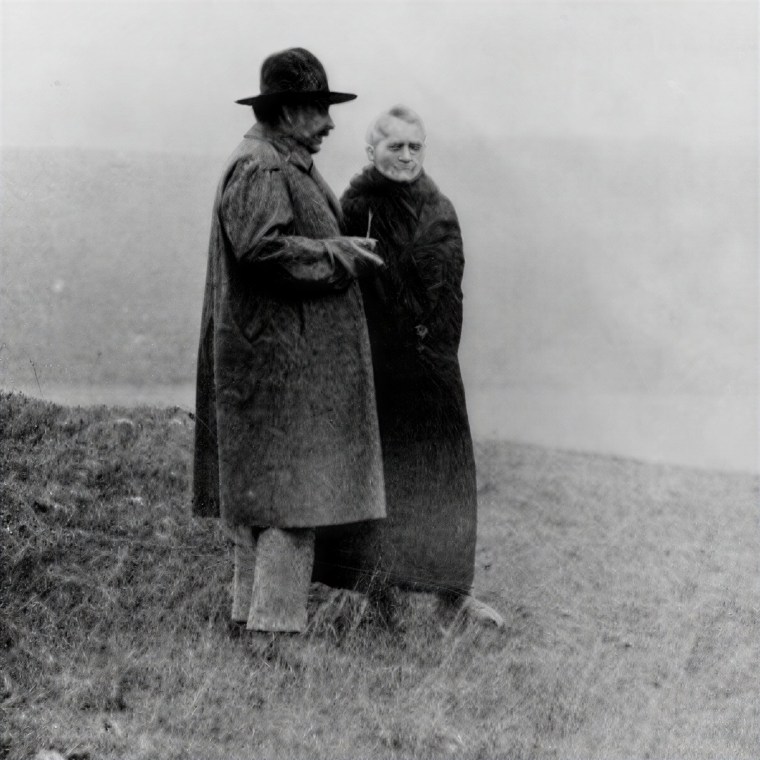
A misdated photograph, two of the largest minds of the last century, and the partnership physics never got. The photograph travels well. A man and a woman walk the edge of a lake, both buttoned into heavy coats against a cold the season should not have brought. He wears the famous hair, gray now at the temples, the drooping mustache, the look of someone who long ago stopped negotiating with his tailor. She is smaller and upright, her face composed into the expression of a person who has weighed sorrow by the gram. Their arms are linked. The internet, which prefers its history pre-chewed, captions the image with confident precision: Albert Einstein and Marie Curie, Saranac Lake, New York, 1929. Nearly every word of that caption is wrong.

Continue reading → Arm in Arm with Chance

The Glass People: The Materials of Madness, from the Glass King to the Simulation

More than six hundred years ago, the King of France stopped letting anyone touch him. Charles VI had iron rods sewn into his clothing and moved through his palace with the stiff care of a man carrying something breakable, because he believed he was carrying something breakable. He believed it was himself. The chronicles of his reign record that the king became convinced his body had turned to glass, and that a careless embrace or an ordinary stumble would shatter him to pieces on the stone floor.

Continue reading → The Glass People: The Materials of Madness, from the Glass King to the Simulation